


In 2017, the Kennedy Trust launched its Senior Research Fellowship scheme, with the primary aim of supporting young scientists.
The highly competitive five-year Fellowships of between £1.5m to £2.5m are awarded to promising independent researchers with a proven track record of excellence in any scientific discipline relevant to the field of rheumatology or related musculoskeletal disease.
Applications are invited from eligible UK universities supporting scientific or medical research; applications from individuals are not accepted. An international panel of experts is convened to review the applications.
Our Senior Research Fellowships are included in the Royal Society’s list of accelerated fellowship providers, enabling our Fellows to apply for a fast-tracked Global Talent Visa under the ‘exceptional promise’ category for potential research leaders. Further information can be found here.
- Funding amount: up to £1.5m
- Funding duration: up to 5 years
- Eligibility: researchers with a proven track record of excellence in their field who are at the stage of developing their own independent area of research; they should not currently hold a permanent academic position. Each UK research institution will be invited to undertake an internal review process before putting forward a single candidate each. Applications from individuals will not be accepted
- Applications open: The scheme will next open for applications in 2027
For further details, please download a copy of our guidance notes and application form. If you have any questions about the call, please contact submissions@kennedytrust.org.
PREVIOUS RECIPIENTS
Dr John Grainger, The University of Manchester
The integration of long-range and local Mononuclear phagocyte training signals in the treatment of rheumatoid arthritis
Dr John Grainger, at the University of Manchester’s Division of Infection, Immunity & Respiratory Medicine, was the first recipient of a Kennedy Trust Senior Research Fellowship in 2018. Dr Grainger’s research focuses on understanding the integration of long-range and local mononuclear phagocyte (MP) training signals in the treatment of rheumatoid arthritis.
His project will seek to identify the mechanisms by which specific long-range signals train MP function in the bone marrow in inflammation that heals as well as establishing how these systems may go wrong in rheumatoid arthritis (RA) patients. Ultimately, the aim is to use this knowledge to both improve targeted therapeutic strategies for RA patients and inform development of novel drugs to treat disease.
MORE ABOUT DR GRAINGER

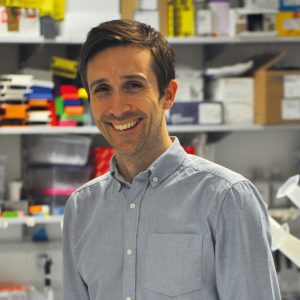
Professor Adam Croft, The University of Birmingham
Immune effector fibroblasts in refractory rheumatoid arthritis
Professor Adam Croft is Professor of Translational Rheumatology and Head of the University of Birmingham’s Department of Inflammation and Ageing. Professor Croft began his Kennedy Trust Senior Research Fellowship in October 2020, to determine the type of fibroblasts associated with refractory disease in RA, the function of these fibroblasts and the mechanisms that regulate their behaviour.
His project will test the hypothesis that the ‘fibroblast pathotype,’ defined as the composition of different types of fibroblast subsets within the synovial membrane, is a critical determinant of the persistence of joint inflammation and response to treatment. The findings from this research will provide a clear rationale for the therapeutic targeting of specific subsets of fibroblasts in RA.
MORE ABOUT PROFESSOR CROFT


Dr Rebecca Gentek, The University of Edinburgh
Pathological programming of immune development
Dr Rebecca Gentek, at the University of Edinburgh’s Centre for Inflammation Research, began her Kennedy Trust Senior Research Fellowship in October 2020. Dr Gentek’s research focuses on the connection between early life adversity, immune development and arthritis.
It is now well recognized that adverse events in early life can have long-lasting effects on an individual’s health. For example, children born to mothers that smoked during pregnancy have an increased risk to develop RA. Dr Gentek’s research will improve our understanding of how the developing immune system is affected by early life adversity, and how this in turn impacts the risk to developing chronic diseases like RA. Long-term, it might also help develop new therapies for early stages of disease.
MORE ABOUT DR GENTEK

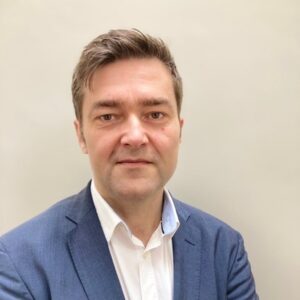
Professor Sinisa Savic, The University of Leeds
The role of somatic mutations in the pathogenesis of immune-mediated inflammatory disorders
Professor Savic is Professor of Clinical Immunology at University of Leeds, Leeds Institute of Rheumatic and Musculoskeletal Medicine. The focus of Professor Savic’s research is to understand the role of somatic mutations (non-inherited acquired mutations) in disease pathotypes, and their influence on response to treatment. Professor Savic’s research concept has been developed from his previous work on acquired systemic autoinflammatory disorders and the role of somatic mutations restricted to the cells of myeloid linage.
The project will expand the search for somatic mutations beyond autoinflammatory disorders. It will explore the link between clonal haematopoiesis of indeterminate potential and the development of autoinflammatory pathotypes across a range of common inflammatory conditions, including vasculitis, rheumatoid arthritis and connective tissue diseases. The project will also explore the link between occult malignancies and the onset of inflammatory disorders, and define the role of cell free DNA in the early diagnosis of malignancies, as a danger associated molecular pattern, and a driver of the inflammatory response.
MORE ABOUT PROFESSOR SAVIC

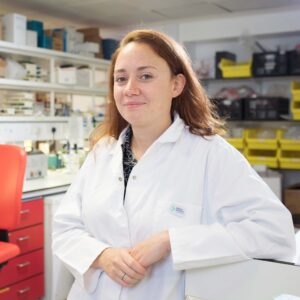
Dr Elizabeth C. Rosser, University College London
Gut-derived metabolites and modulation of pathogenic B-cells in Juvenile Idiopathic Arthritis
Dr Rosser has previously been the recipient of two competitive fellowships (Versus Arthritis, Medical Research Foundation) to carry out her work in the Centre for Rheumatology, UCL and Centre for Adolescent Rheumatology Versus Arthritis at UCL, UCLH and GOSH. Her research will investigate the challenging question of how the gut-microbiota and dietary-derived metabolites impact B cell function in paediatric and adolescent rheumatic disease. As part of her Kennedy Senior Fellowship, she will build on this work to identify which metabolites are supporting the pathogenic function of B cells in Juvenile Idiopathic Arthritis (JIA).
MORE ABOUT DR ROSSER

Dr Tetsuo Hasegawa, University of Cambridge
The role of neuroimmune interaction in the development of arthritis and immune-driven pain
Dr Hasegawa was awarded a Kennedy Trust Senior Research Fellowship in 2024. His project will generate a 3D molecular atlas of the synovium using his unique imaging system and investigate questions over why joints are responsive to a variety of systemic pathologies, how communications between synovial cells and nociceptors influence disease progression, or what mechanisms underlie immune-driven pain in the joints. The findings from this research will provide new strategies to target neuroimmune interactions in arthritis and joint pain.
MORE ABOUT DR HASEGAWA

